How Five Toe Shoes Improve Foot Health: The Complete Guide for Brands and Buyers
Modern footwear promises comfort. Yet, many feet tell a different story. In fact, many adults experience foot pain. Also, podiatry clinics treat the same conditions daily. These issues include bunions and flat feet. They also include chronic heel pain. Importantly, research points to a major cause. Specifically, normal shoes are often narrow and rigid.
As a result, people want the truth. They want to know what the foot needs. Essentially, feet need room to spread. Also, they need direct ground feedback. Above all, they need freedom to move. At the center of this trend is one product. That product is five toe shoes.
Five toe shoes are also called toe shoes. Basically, they give every toe a pocket. Moreover, they remove heel elevation. Instead of stiff midsoles, they use thin ones. Admittedly, they look unusual. Still, their design is deeply natural.
This guide explains how five toe shoes help. First, we look at who benefits. Then, we show how to judge quality. Finally, we explain what buyers need to know. You will find clear answers below.
What Are Five Toe Shoes?
Five toe shoes are minimalist footwear. More importantly, they match real foot anatomy. Instead of a closed toe box, the upper has five pockets. Think of them like gloves for feet. Because of this, each toe moves alone.
The Four Core Design Rules
Generally, four rules define a true five toe shoe:
- Individual toe pockets. First, every toe sits in a sleeve. So, toes stay aligned.
- Zero drop. Next, the heel and forefoot share the same height. Thus, nothing tilts your posture.
- Anatomical forefoot shape. Also, the front follows the natural fan shape. Thus, it does not squeeze toes.
- Thin, flexible sole. Finally, a thin rubber sole shields you. At the same time, it keeps ground feel.
Together, these features act as a lightweight shield. Ultimately, the foot can finally do its job.
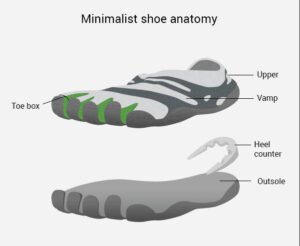
Overall, five toe shoes belong to the barefoot family. However, the main difference is toe construction. We compare these later. If you are new, a barefoot shoes collection helps a lot. In fact, it shows how broad this market is.
Why Modern Shoes Change Foot Shape
The average shoe looks comfortable. However, its design fights foot anatomy. Let us break this down into four clear problems.
1. The Problem of Toe Compression
First, most shoes taper sharply at the front. Inside that pointed box, the big toe gets pushed inward. Surprisingly, this causes bunions. Interestingly, barefoot people show very few bunions. So, experts now push for foot-shaped shoes.
2. The Impact of Heel Elevation
Second, most sneakers raise the heel. Therefore, that wedge shifts body weight forward. Moreover, it increases forefoot pressure. Worse still, it shortens the Achilles tendon. Finally, it forces the spine into bad alignment.
3. Rigid Soles and Artificial Support
Third, stiff soles do the work of the foot. As a result, small foot muscles stop working. Like any unused muscle, they weaken. In fact, NIH research shows this clearly. Specifically, supportive shoes cause weaker foot muscles. Meanwhile, minimal shoes build stronger feet.
4. Sensory Deprivation and Balance Loss
Finally, the foot sole has many nerve endings. These report texture and slope to the brain. Sadly, thick soles block this feedback. As a result, balance suffers. Basically, people land harder because they lack feeling.
In short, normal shoes turn feet into passive objects. On the other hand, five toe shoes reverse this. Therefore, this reversal brings many health benefits.
7 Health Benefits of Five Toe Shoes
These benefits are not just marketing. Rather, they follow from foot anatomy. Also, peer-reviewed research backs them up. Here is exactly what changes.
1. Restored Toe Alignment
Inside a five toe shoe, the big toe stays straight. It does not drift inward. Because of this, the foot rebuilds natural support. Over weeks, users notice a positive change. Specifically, their toes re-spread naturally. This is very true with toe exercises.
2. Stronger Foot Muscles
Crucially, there is no rigid arch support. So, foot muscles must activate on every step. The evidence is very impressive. For example, one study found amazing results. Daily use in minimal shoes increased foot strength by 57.4%. Also, another trial found similar proof. Ultimately, stronger feet mean resilient arches. Moreover, they protect against plantar fasciitis. Notably, this is the top cause of heel pain.
3. Better Balance and Stability
Surprisingly, balance begins at the sole. A thin sole returns rich texture data. So, the brain makes faster corrections. Because of this, rehab programs love minimalist shoes. This makes sense. Specifically, Harvard Health notes a clear benefit. Minimalist shoes improve balance and reduce foot pain.
4. Healthier Posture
First, zero drop removes the heel wedge. Therefore, the spine stacks more naturally. Also, the pelvis is no longer tilted. Because of this, wearers report less back tension. Logically, this happens when you remove the heel incline.
5. A More Natural Walking Pattern
Typically, thick shoes cause a heavy heel strike. Also, they cause long, pounding strides. On the other hand, thin shoes change this. Walkers adopt a softer landing. Moreover, they take shorter strides. Ultimately, this reduces joint impact.
6. Better Ground Feel
Basically, the foot is a main data source. Fortunately, a thin sole keeps that data alive. The result is sharper agility in sports. Likewise, it brings confidence on trails. Finally, it improves gym movement.
7. Less Foot Fatigue Over Time
This point sounds odd. How can less cushion mean less fatigue? The answer is simple. Cushioning masks weakness. But, it does not cure it. As muscles strengthen, users report a great benefit. Basically, their feet feel fresher all day. The key is a slow transition. 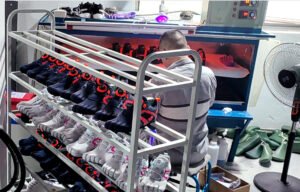
Who Should Wear Five Toe Shoes?
Five toe shoes are very versatile. In fact, they shine in many settings. Here are some of the best use cases.
Ideal Activities for Toe Shoes
- Walking and daily wear — First, they offer light comfort for city life.
- Gym and cross-training — Also, they let you feel the floor during squats.
- Trail and hiking — Plus, aggressive tread lets toes grip rocks.
- Yoga and Pilates — Moreover, toe pockets improve mat grip.
- Travel — Because they are light, they pack flat.
- Water sports — Finally, quick-dry uppers are perfect for the beach.
Because the market is broad, factories build specific lines. For example, you can find five finger running shoes. You can also find private label yoga shoes.
Who Needs to Be Cautious?
However, some people should be careful. First, people with nerve damage need a doctor. Also, those with acute injuries need medical advice. Furthermore, everyone should transition slowly. The reason is simple. Calves and tendons need weeks to adapt.
How to Choose High-Quality Five Toe Shoes
Sadly, not all toe shoes are equal. Therefore, buyers should check eight key elements.
The 8-Point Quality Checklist
- Upper material — First, choose breathable mesh for training. Or, choose quick-dry knit for water.
- Outsole rubber — Second, good rubber grips wet surfaces. Also, check the tread pattern.
- Sole thickness — Third, the sole must be thin. Roughly 3–7 mm is ideal. Yet, it must remain safe.
- Toe pocket grading — Fourth, pockets must match real toe lengths. Otherwise, they cause blisters.
- True zero drop — Fifth, always verify the heel and forefoot match.
- Weight — Sixth, a good pair feels light. Typically, it weighs 120–200 grams.
- Breathability — Seventh, moisture control is vital. It prevents bad odors.
- Construction — Finally, look for clean stitching. This prevents early damage.
For brand owners, this list is an audit tool. Naturally, a good OEM partner will answer these questions. Also, they will provide test reports. We will discuss this more below.
Five Toe Shoes vs Barefoot Shoes: What’s the Difference?
People often mix up these terms. Therefore, here is a simple comparison.
| Feature | Five Toe Shoes | Barefoot (Minimalist) Shoes |
|---|---|---|
| Toe construction | Five individual pockets | One wide, foot-shaped toe box |
| Toe independence | Full — each toe moves separately | Partial — toes share one space |
| Ground feel | Maximum | High |
| Warmth & weather protection | Lower | Higher (easier to insulate) |
| Learning curve | Higher | Lower |
| Best for | Training, balance work, water sports | Daily wear, office styles, cold weather |
Overall, both share zero drop and thin soles. However, the choice depends on toe separation. Also, many brands sell both lines. As a result, they cover the whole market.
Common Mistakes When Buying Five Toe Shoes
Sadly, buyers make avoidable errors. To prevent this, watch out for these six mistakes.
Top 6 Buyer Mistakes
- Wrong sizing. First, pockets must align with your toes. So, measure your feet carefully. Never just size up.
- Thick soles. Second, a chunky sole ruins the purpose. If ground feel dies, benefits die too.
- Cheap rubber. Third, bad outsoles slip easily. Also, they wear out fast.
- Weak construction. Fourth, poor stitching leads to damage. This usually happens at the toe post.
- Fast transitions. Fifth, switching overnight causes sore calves. Instead, build up slowly over weeks.
- Wrong activity. Finally, a water shoe is not a trail shoe. Always match the shoe to your task.
Avoiding these mistakes is vital for brands. For instance, cheap rubber will cause returns. Also, it will attract bad reviews.
OEM Five Toe Shoe Manufacturing: A Note for Brands
Currently, demand for natural footwear keeps growing. Also, five toe shoes have loyal customers. Once people adapt, they rarely go back. Plus, they buy multiple pairs. So, this makes the category great for private labels.
What to Look for in a Factory
When evaluating an OEM partner, look for these five things:
- Toe-pocket experience — First, grading five pockets is very hard.
- Material libraries — Second, they must have mesh and knit options.
- Proven rubber — Third, require slip-resistance test data.
- Clear sampling — Fourth, ensure the prototype stages are clear.
- Quality control — Finally, demand complete export documents.
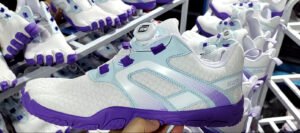
For example, EAXIN works as a five finger shoes manufacturer. Specifically, they offer private label OEM programs. Reviewing a factory’s custom footwear production early saves time. If you plan a line, request a roadmap first.
Frequently Asked Questions
Are five toe shoes good for walking?
Yes, they are great. For healthy people, they are excellent walking shoes. Because the sole is thin, it encourages a soft stride. Also, the wide forefoot lets toes spread.
Do five toe shoes help plantar fasciitis?
They can support recovery. They strengthen foot muscles and reduce fascia strain. However, this condition has many causes. So, consult a doctor first. Also, transition very slowly.
Can beginners wear five toe shoes?
Yes, beginners can wear them. Start with 30 minutes of daily wear. Then, increase the time slowly. The shoes are safe. The real mistake is rushing the process.
How long does it take to get used to them?
Most people adapt in two to six weeks. Mild calf soreness is normal at first. In fact, it just means muscles are waking up.
Are five toe shoes good for hiking?
Yes, they are great for trails. Specifically, models with toe caps handle rocks well. Just make sure your feet are ready first.
How do I clean five toe shoes?
Cleaning is very easy. Most pairs can be hand-washed with mild soap. Afterward, air-dry them. Never use a hot dryer.
Can I customize them with my own logo?
Yes, customization is very common. OEM factories offer private label programs. These cover logos, colors, and packaging.
What is the MOQ for private label?
MOQs vary by factory. For example, stock programs have low minimums. On the other hand, custom designs need more volume. So, contact the factory for a quote.
Final Thoughts
Ultimately, five toe shoes are not a gimmick. Instead, they fix a century of bad shoe design. They restore toe alignment and rebuild foot strength. Also, they sharpen balance and return natural gait. In fact, they fix the root causes of foot pain.
To get results, start slowly. Also, choose quality materials and match the shoe to your task. If you do this, your feet will thank you. For brands, this market offers loyal customers and strong sales. Whether you launch one shoe or a full line, success comes from respecting foot anatomy.
Ready to build your own line? So, contact the EAXIN team today. We can discuss OEM and private label options.