Five Toe Dance Shoes: The Complete Guide for Dancers, Studios, and Brands
Dance demands total control of the feet. Yet, many dancers train in shoes that fight their feet. In fact, stiff soles block natural articulation. Also, narrow toe boxes squeeze the toes tight. As a result, balance suffers and fatigue builds early. Importantly, a new type of footwear is changing this. That footwear is five toe dance shoes.
These shoes give every toe its own pocket. Moreover, they keep the sole thin and flexible. So, the foot moves like a bare foot, but with protection. Because of this, dancers from contemporary to ballroom are switching.
This guide explains everything clearly. First, we define five toe dance shoes. Then, we list seven proven performance benefits. After that, we compare them with traditional dance shoes. Finally, we share buying tips and OEM notes for brands. You will find practical answers below.
What Are Five Toe Dance Shoes?
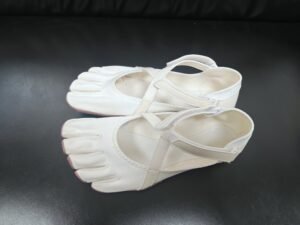
Five toe dance shoes are minimalist footwear built for movement. Basically, they wrap each toe in its own pocket. Also, they use a thin, flexible sole. Therefore, the foot can flex, point, and grip naturally. Think of them as a smart hybrid. They mix barefoot freedom with real shoe protection.
The Core Design Features
Every good pair shares four core features:
- Individual toe pockets. First, each toe moves alone. So, articulation stays clean.
- Zero drop. Next, heel and forefoot sit level. Thus, posture stays neutral.
- Wide anatomical forefoot. Also, the toes can spread fully. This boosts balance.
- Thin pivot-friendly sole. Finally, the sole grips without sticking. It protects floor feel.
Together, these features let the foot do its job. Ultimately, the shoe disappears, and the dance takes over.
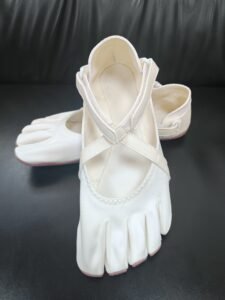
Five toe dance shoes belong to the wider barefoot family. However, makers tune them for studio floors. If you are new here, browsing a barefoot shoes collection helps. In fact, it shows how broad this category has become.
Why Dancers Are Ditching Traditional Dance Shoes
Traditional dance shoes look smart on stage. However, many designs limit the foot in practice. Let us look at three common problems.
1. Rigid Soles Block Articulation
First, many shoes use stiff soles and shanks. As a result, the foot cannot roll through the floor. So, jumps and relevés feel heavy. Worse still, the small foot muscles stay idle.
2. Narrow Toe Boxes Squeeze Toes
Second, pointed toe boxes push the toes together. Surprisingly, this weakens the push-off phase of every jump. Also, it can cause bunions over time. In fact, NIH-indexed research shows narrow, stiff shoes weaken intrinsic foot muscles. Meanwhile, minimal footwear keeps those muscles strong.
3. Poor Floor Feel Hurts Balance
Finally, thick padding mutes floor feedback. Sadly, dancers need that feedback for turns and landings. As a result, they grip with tension instead of control. Consequently, ankles work harder and fatigue arrives early.
In short, traditional shoes often protect the foot by silencing it. On the other hand, five toe dance shoes protect the foot while keeping it awake. Therefore, more dancers now train in them daily.
7 Proven Ways Five Toe Dance Shoes Improve Your Performance
These benefits follow from foot anatomy. Also, research on minimal footwear supports them. Here is exactly what changes in the studio.
1. Better Balance and Stability
Balance starts at the sole of the foot. A thin sole sends rich data to the brain. So, the body makes faster micro-corrections. Because of this, slow adagios and balances feel steadier. Specifically, Harvard Health notes that minimalist shoes may improve balance.
2. Stronger Feet and Ankles
Crucially, there is no rigid support to hide behind. So, foot and ankle muscles must work on every step. The evidence is strong. For example, one controlled study found that daily minimal footwear use raised foot strength by 57.4% in six months. Also, a well-known BYU trial found minimalist walking matches formal foot exercises. Stronger feet mean higher relevés and cleaner jumps. Moreover, they may lower injury risk. Notably, Johns Hopkins Medicine calls ankle sprains the number one traumatic injury in dancers.
3. Cleaner Turns and Spins
Many five toe dance shoes use a pivot point under the ball. Therefore, turns feel smooth and controlled. Moreover, the grip is tuned, not sticky. So, you spin without sticking or slipping. As a result, spotting stays clean and knees stay safe.
4. Better Toe Articulation and Pointing
Each toe pocket trains the toes to work alone. As a result, pointing and gripping become precise. This matters in contemporary, lyrical, and ballet conditioning. Ultimately, your lines look cleaner on stage.
5. Sharper Floor Feel (Proprioception)
Proprioception is the body’s position sense. Importantly, the foot is one of its main sensors. Fortunately, a thin sole keeps that sensor switched on. So, you read slick or sprung floors instantly. This skill prevents slips during fast choreography.
6. Less Fatigue in Long Rehearsals
Cushioning masks weakness, but it does not fix it. As foot muscles strengthen, fatigue drops. Basically, strong feet tire slower. So, long rehearsal days feel lighter. Furthermore, recovery between sessions improves.
7. Safer Landings and Joint Protection
Thin soles teach softer landings. Because you feel the floor, you absorb impact with muscles, not joints. Also, better alignment protects the knees and hips. Logically, this lowers overuse strain over time. This point matters a lot. In fact, research in the NIH’s PMC database reports the foot and ankle as the most common injury site in professional ballet. Meanwhile, NYU Langone’s Harkness Center for Dance Injuries builds whole prevention programs around foot and ankle health.
Best Dance Styles for Five Toe Shoes
Five toe dance shoes fit many styles. In fact, they shine anywhere foot control matters. Here are the best matches.
Contemporary and Modern
First, these styles demand floor work and articulation. Five toe shoes give grip plus freedom. So, rolls, falls, and recoveries feel safer.
Lyrical and Ballet Conditioning
Also, lyrical dancers love the barefoot look with protection. Moreover, ballet students use them for foot-strengthening work. Thus, they build power without losing line.
Zumba, Aerobics, and Studio Fitness
Plus, fitness dance involves fast pivots and hops. A pivot-friendly sole protects the knees. Also, the light weight keeps classes fun. For example, light dance and aerobics toe separator shoes weigh only about 120 grams per shoe.
Belly Dance and Pole Fitness
Furthermore, belly dancers need toe control for shimmies. Meanwhile, pole athletes grip with their toes for stability. So, separate pockets add real value here.
Ballroom and Latin Practice
Finally, practice sessions benefit from strength work. However, keep competition shoes for show day. This split gives the best of both worlds.
Because demand spans so many styles, brands now build style-specific lines. Also, private label five finger yoga shoes double nicely for dance fusion classes.
Five Toe Dance Shoes vs Traditional Dance Shoes
People often ask how the two types differ. Therefore, here is a simple table for quick answers.
| Feature | Five Toe Dance Shoes | Traditional Dance Shoes |
|---|---|---|
| Toe construction | Five separate pockets | One closed toe box |
| Floor feel | Maximum | Low to medium |
| Foot muscle activation | High | Low |
| Turn control | Pivot-tuned sole | Full-sole grip or suede |
| Best use | Training, conditioning, fusion classes | Stage shows and strict dress codes |
| Adaptation period | One to three weeks | None |
Both types have a place. However, many dancers now train in five toe shoes and perform in traditional ones. As a result, they gain strength plus the stage look.
How to Choose the Right Five Toe Dance Shoes
Not all pairs perform the same. Therefore, check these six points before you buy.
The 6-Point Buyer Checklist
- Sole type — First, pick a pivot-friendly sole for turns. Or, choose grippier rubber for floor work.
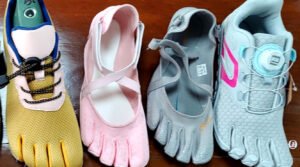
- Upper material — Second, choose stretch knit or soft mesh. It should move like a second skin.
- Weight — Third, lighter is better. A good pair feels almost weightless.
- Toe pocket fit — Fourth, pockets must match your toe length. Otherwise, blisters form quickly.
- Zero drop — Fifth, confirm the heel and forefoot are level.
- Indoor vs outdoor — Finally, match rubber hardness to your main floor.
For studios and brands, this list becomes a quality audit. Naturally, a good OEM partner will welcome these checks.
How to Transition Safely
New users must adapt slowly. The reason is simple. Sleeping muscles need time to wake up. Here is a safe three-week plan.
Week 1: Short Sessions
First, wear the shoes for 20 to 30 minutes. Also, stick to simple barre and floor work. So, the feet learn gently.
Week 2: Build Technique
Next, add turns and small jumps. However, keep full routines short. Meanwhile, stretch the calves daily.
Week 3 and Beyond: Full Classes
Finally, join full classes as comfort allows. Also, listen to your feet every day. Ultimately, most dancers adapt within three weeks.
Common Mistakes to Avoid
Sadly, buyers repeat the same errors. So, watch for these four mistakes.
- Too much grip. First, sticky soles block turns. So, the knees take the twist.
- Wrong sizing. Second, pockets must align exactly. Therefore, measure both feet first.
- Skipping adaptation. Third, rushing causes sore calves. Instead, build up slowly.
- Stage shoes for training. Finally, save thin soles for practice, not shows.
Avoiding these saves money and prevents injuries. For brands, it also saves returns and bad reviews.
OEM and Private Label Notes for Dance Brands
The dance footwear niche keeps growing. Also, dancers buy multiple pairs per year. So, private label dance lines are very attractive.
What to Look for in a Factory
- Stretch knit experience — First, uppers must stretch without bagging.
- Pivot sole tooling — Second, ask for proven turn-friendly patterns.
- Size grading skill — Third, five pockets must grade cleanly across sizes.
- Low MOQ options — Fourth, test the market before big orders.
- Clear QC — Finally, demand test reports and samples.
For example, EAXIN works as a five finger shoes manufacturer with private label programs. Also, its custom footwear production team can develop dance-specific lasts. If you plan a line, request a roadmap first.
Frequently Asked Questions
Are five toe dance shoes good for beginners?
Yes, they are beginner-friendly. Start with short sessions. Then, build up slowly over two to three weeks.
Can I use them for ballet?
They are great for conditioning and foot-strengthening work. However, keep classic ballet shoes for pointe and strict classes.
Do they really help with turns?
Yes. A pivot-friendly sole lets you spin smoothly. So, turns feel controlled, not sticky.
Are they OK for Zumba and aerobics?
Absolutely. The light weight and pivot points protect knees. Also, the grip suits quick direction changes.
Can I wear them outdoors?
Short walks are fine. However, rough asphalt wears thin soles fast. So, keep them mainly for studio floors.
How do I clean them?
Hand-wash with mild soap. Then, air-dry away from heat. Never use a dryer.
Can I private label them with my own logo?
Yes. OEM factories offer logo, color, and packaging customization. So, your brand stays front and center.
What is the MOQ for dance styles?
MOQs vary by factory and customization level. Stock programs start small. Custom builds need more volume. So, ask the factory directly.
Final Thoughts
Ultimately, five toe dance shoes are not a gimmick. Instead, they return control to the dancer’s foot. They build strength, sharpen balance, and clean up technique. Also, they fit a wide range of styles. In fact, they fix the root limits of stiff traditional shoes.
To get results, start slowly and choose quality construction. Also, match the sole to your main style. If you do this, your training will feel lighter and stronger. For brands, this niche offers loyal buyers and repeat orders. Whether you launch one style or a full line, respect the foot and win the market.
Ready to build your own dance line? So, contact the EAXIN team today. We can discuss OEM, ODM, and private label options for five toe dance shoes.