The Ultimate Guide to School Shoes: Foot Health, Materials, and Expert Manufacturing
Furthermore, school shoes are not just about fashion or passing uniform inspections. Instead, they are fundamental medical tools that support growing bones and developing joints. For this reason, poor-quality shoes can lead to a lifetime of painful foot problems. Conversely, high-quality footwear promotes healthy growth, better posture, and increased daily comfort.
To help you understand this complex topic, EAXIN SHOES has compiled this comprehensive, ultimate guide. After all, as a professional footwear manufacturer with over 20 years of global export experience, we know exactly what goes into making the perfect shoe. Consequently, whether you are a parent looking for buying tips, a school administrator planning uniform updates, or a wholesale buyer seeking reliable OEM/ODM manufacturing, this guide has everything you need to know.
Chapter 1: The Anatomy of a Perfect School Shoe
First, we must understand the structure of a shoe. A high-quality school shoe is a complex piece of engineering. Specifically, it consists of several crucial parts working together. Let us break down the anatomy of a premium student shoe.
1.1 The Upper (Protection and Breathability)
The upper is the top part of the shoe that covers the foot. Primarily, its job is to hold the foot securely in place. In addition, it protects the foot from weather and impacts. Therefore, the upper must be flexible enough to bend with the foot, yet strong enough to resist daily wear and tear. Commonly, traditional school shoes use black leather or high-grade microfiber for the upper.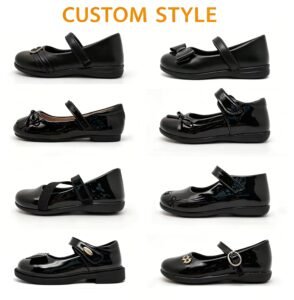
1.2 The Outsole (Traction and Durability)
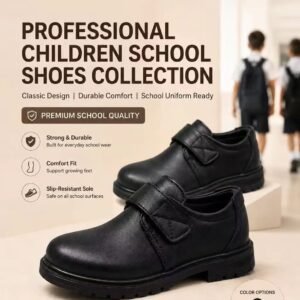
The outsole is the bottom of the shoe that touches the ground. Undoubtedly, this is the first line of defense against slips and falls. For instance, school playgrounds can be wet, muddy, or highly polished. Because of this, a superior outsole features deep, multi-directional tread patterns. Furthermore, it must be highly resistant to abrasion to survive constant running on concrete.
1.3 The Midsole (Shock Absorption)
Hidden between the upper and the outsole is the midsole. Essentially, this is the shock absorber of the shoe. Every time a child jumps or runs, heavy force is pushed up through their legs. To prevent injury, a good midsole absorbs this kinetic energy. Typically, expert manufacturers like EAXIN use advanced EVA (Ethylene-Vinyl Acetate) foam to provide lightweight, long-lasting cushioning. 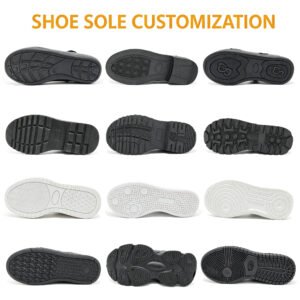
1.4 The Heel Counter (Stability)
Look at the back of a good school shoe. You will notice a stiff cup surrounding the heel. This component is called the heel counter. Specifically, it prevents the ankle from rolling inward or outward. As a result, the foot remains perfectly aligned, which is vital for preventing knee and hip pain during development.
1.5 The Toe Box (Room to Grow)
The toe box is the front area where the toes rest. Importantly, toes need space to spread out naturally while walking. If the toe box is too narrow, it can cause severe deformities over time. Therefore, professional school shoes feature a wide, rounded toe box.
Chapter 2: Podiatry and Children’s Foot Health
Now, let us explore the medical side of footwear. Children are not just mini-adults. In fact, their bodies are entirely different, especially their feet. According to medical experts, proper footwear is a cornerstone of pediatric health.
2.1 The Process of Ossification
When a baby is born, their feet are mostly made of soft cartilage. Over the years, this cartilage slowly turns into solid bone. This process is called ossification. Shockingly, the bones in a foot do not fully harden until a person reaches their late teens. Because of this, wearing tight or poorly shaped shoes during childhood can permanently mold the bones into the wrong shape.
2.2 Common Issues Caused by Bad Shoes
Unfortunately, wearing the wrong school shoes leads to a variety of painful conditions. For example, parents and doctors frequently observe the following issues:
- Blisters and Calluses: Friction from stiff, unlined shoes constantly rubs the skin. Eventually, this causes painful blisters.
- Ingrown Toenails: When the toe box is too tight, toes are crushed together. As a result, the nail grows straight into the skin.
- Flat Feet (Fallen Arches): A lack of proper arch support causes the foot to collapse inward. According to the American Podiatric Medical Association (APMA), this can lead to chronic knee and back pain later in life.
- Plantar Fasciitis: Poor shock absorption strains the thick band of tissue at the bottom of the foot, causing sharp heel pain.
Therefore, investing in high-quality school footwear is not an expense; it is an investment in a child’s lifelong physical health.
Chapter 3: Material Science in Shoemaking
3.1 Upper Materials: Leather vs. Synthetics
Historically, genuine full-grain leather was the only acceptable material for premium school shoes. Indeed, leather is highly durable, molds to the shape of the foot, and allows moisture to escape. However, genuine leather is expensive and requires constant polishing.
Today, modern science offers incredible alternatives. For instance, High-Grade Microfiber Leather is becoming the industry standard. Specifically, microfiber mimics the microscopic structure of real leather. As a result, it is highly breathable and tear-resistant. Even better, it is waterproof, lightweight, and completely vegan. At EAXIN, we utilize top-tier microfiber to create premium shoes that cost less than traditional leather.
Alternatively, basic PU (Polyurethane) leather is used for budget-friendly models. While PU is easy to clean and water-resistant, it does not breathe as well as microfiber or real leather.
3.2 Outsole Materials: Rubber vs. TPR
When it comes to outsoles, durability is the top priority. Traditionally, natural rubber is the absolute best material for grip and longevity. Furthermore, it handles temperature changes exceptionally well.
On the other hand, TPR (Thermoplastic Rubber) is highly popular for school shoes. Why? Because TPR is lighter than solid rubber and provides excellent slip resistance. Additionally, TPR is easier to mold into complex, supportive shapes during the injection process.
3.3 Inner Linings: Keeping Feet Fresh
Finally, the inside of the shoe matters just as much as the outside. Kids’ feet have highly active sweat glands. Consequently, cheap synthetic linings will trap sweat, leading to severe odor and fungal infections. To prevent this, expert manufacturers use breathable BK mesh or perforated pigskin linings. These materials wick moisture away from the skin, keeping feet dry all day.
Chapter 4: The Ultimate Guide to Fitting School Shoes
Even if you buy the most expensive, well-made shoe in the world, it will cause harm if it does not fit correctly. Therefore, proper fitting is a skill every parent and shoe retailer must master. Follow these golden rules to ensure a perfect fit every time.
- The Afternoon Rule: Always measure and try on shoes late in the afternoon. Because feet naturally swell and expand after hours of walking, an afternoon fitting ensures the shoe will never feel too tight.
- Measure Both Feet: Surprisingly, human bodies are rarely perfectly symmetrical. In fact, most people have one foot slightly larger than the other. Therefore, you must fit the shoe to the larger foot.
- The Rule of Thumb: When the child is standing up, press your thumb on the front of the shoe. Ideally, there should be about a thumb’s width (roughly 1 to 1.5 centimeters) of space between the longest toe and the end of the shoe. This space allows for growth and dynamic movement.
- Check the Width: Length is not everything. Additionally, you must check the width. If the shoe pinches the sides of the foot, or if the upper bulges out over the sole, the shoe is too narrow.
- The Heel Slippage Test: Finally, ask the child to walk around the store. Pay close attention to the back of the shoe. If the heel slips out of the shoe while walking, it will cause severe blisters.
Chapter 5: Care and Maintenance of School Shoes
Once you have purchased the perfect pair, you want them to last the entire school year. Unfortunately, kids are famously rough on their clothes. However, with a little basic maintenance, you can double the lifespan of their footwear.
First, establish a cleaning routine. For leather shoes, wipe away dirt with a damp cloth every weekend. Afterward, apply a quality shoe polish to nourish the leather and restore its waterproof properties. For microfiber or canvas shoes, a gentle scrub with a soft brush and mild soap will remove most stains.
Second, never use a heater to dry wet shoes. If a child steps in a deep puddle, parents often place the shoes near a radiator. However, extreme heat will crack leather, melt glues, and warp the shape of the shoe. Instead, stuff the wet shoes with dry newspaper and let them air dry naturally at room temperature.
Lastly, use a shoe horn. Often, kids are too lazy to untie their laces. As a result, they jam their feet into the shoes, crushing the heel counter. By teaching them to use a shoe horn, you protect the structural integrity of the heel cup.
Chapter 6: Wholesale and OEM Manufacturing with EAXIN SHOES
While this guide helps consumers choose the right shoes, it is also crucial to understand how they are made on a large scale. If you are a global footwear brand, a school district, or a large-scale wholesaler, sourcing the right manufacturing partner is your biggest challenge. This is exactly where EAXIN SHOES steps in.
6.1 Why Source from EAXIN?
Located in Jinjiang, China—the shoemaking capital of the world—EAXIN has over 20 years of dedicated manufacturing experience. Initially, we focused on sports footwear. Today, we have expanded our massive production lines to include highly specialized footwear, including professional school shoes, safety shoes, and chef shoes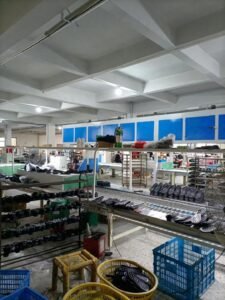
6.2 Strict Quality Control (QC)
When making children’s shoes, there is zero room for error. Therefore, our factory implements rigorous quality control testing. For instance, we conduct repetitive flexing tests to ensure the soles will not crack after 100,000 bends. Furthermore, we perform strict abrasion tests on our upper materials. Consequently, our B2B clients receive products that drastically lower their return rates and boost their brand reputation.
6.3 Comprehensive OEM and ODM Services
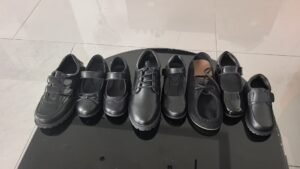
Every market is different. For example, schools in the UK might require traditional formal black leather shoes. Meanwhile, schools in Southeast Asia might prefer lightweight, breathable athletic-style black sneakers. To meet these diverse needs, EAXIN offers full OEM (Original Equipment Manufacturer) and ODM (Original Design Manufacturer) services.
First, you can select from our vast catalog of existing molds to save on development costs. Alternatively, our in-house R&D team can help you design a completely custom shoe from scratch. From custom logo embossing and branded outsoles to specific eco-friendly material sourcing, we handle the entire supply chain for you.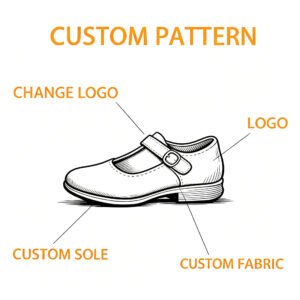
Conclusion: Step Into the Future with EAXIN
In conclusion, a school shoe is a complex, vital piece of equipment that safeguards a child’s health and comfort. From understanding the anatomy of the shoe to mastering the fitting process, every detail matters. Equally important is choosing a manufacturer that refuses to compromise on quality.
For over two decades, EAXIN SHOES has been committed to excellence in footwear manufacturing. Because of this, global brands trust us to deliver durable, comfortable, and affordable shoes every single time.
Are you ready to elevate your footwear business? Whether you need a reliable supplier for wholesale school shoes or a high-tech factory for your custom OEM designs, we are here to help.