How Much Does It Cost to Manufacture Shoes? A Complete Guide to Shoe Manufacturing Costs
How much does it cost to manufacture shoes? This is one of the first questions asked by footwear brands, startups, importers, retailers, and entrepreneurs looking for an
OEM footwear manufacturer.
The short answer is that there is no single fixed price for manufacturing a pair of shoes.
The final cost depends on the type of footwear, materials, construction method, order quantity,
tooling requirements, branding, packaging, quality standards, and other product specifications.
A simple canvas sneaker can have a relatively low manufacturing cost, while a technically engineered
running shoe with premium materials, advanced cushioning, a custom outsole, and multiple molded components
can cost considerably more.
For brands developing footwear in China, a professional factory normally calculates the quotation according
to the actual product specifications instead of using one universal price list. Understanding the different
components of shoe manufacturing cost is therefore essential before comparing suppliers.
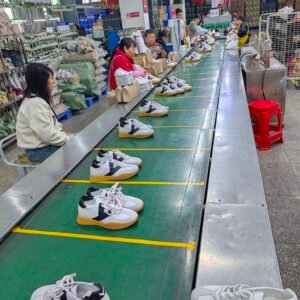
Quick Answer: How Much Does It Cost to Manufacture Shoes?
For many custom and OEM footwear projects, manufacturing costs can range from
under $10 per pair to $30 or more, depending heavily on the product category and specifications.
These figures should only be considered general reference points rather than a guaranteed factory price.
The actual cost to manufacture shoes depends on the design, materials, construction, order
quantity, tooling, quality requirements, branding, packaging, and production requirements.
| Shoe Type | General Manufacturing Cost Level | Main Cost Drivers |
|---|---|---|
| Basic Canvas Sneakers | Low | Simple upper, basic outsole, simple construction |
| Casual Sneakers | Low–Medium | Upper materials, outsole, branding |
| Sports Shoes | Medium | Mesh, cushioning, outsole, technical construction |
| Running Shoes | Medium–High | Midsole technology, engineered upper, outsole |
| Football Boots | Medium–High | Soleplate, upper, traction, construction |
| Padel & Tennis Shoes | Medium–High | Court outsole, stability, reinforcement |
| Safety Shoes | Medium–High | Safety toe, puncture resistance, outsole |
| Premium Leather Shoes | High | Leather quality, construction, finishing |
| Highly Technical Footwear | High | Advanced materials, molds, components, testing |
The important point is that the footwear category alone does not determine the manufacturing price.
Two running shoes can look similar but have very different manufacturing costs because one may use standard EVA
while the other uses an advanced cushioning system. One may use basic mesh while the other uses engineered materials,
and one may use a stock outsole while the other requires a new custom outsole mold.
You can also explore EAXIN’s
sports shoes and footwear manufacturing capabilities
to understand the types of products that can be developed through OEM and private label manufacturing.
What Is Included in Shoe Manufacturing Cost?
When a footwear manufacturer provides a price per pair, the quotation is normally based on a combination
of several different cost components.
A simplified shoe manufacturing cost formula looks like this:
Shoe Manufacturing Cost = Materials + Labor + Components + Factory Overhead + Production Setup + Quality Control + Packaging + Factory Margin
For a custom OEM project, development and tooling costs may also need to be considered separately.
The major cost categories include:
- Upper materials
- Lining and insole materials
- Midsole materials
- Outsole materials
- Shoe components and accessories
- Labor
- Manufacturing overhead
- Tooling and molds
- Sampling and product development
- Quality control and testing
- Packaging
- Order quantity and MOQ
- Custom branding
- Special production requirements
1. Upper Material Is One of the Biggest Cost Factors
The upper is the visible part of the shoe and can represent a significant portion of the manufacturing cost.
Common upper materials include:
- Mesh
- Engineered mesh
- Knit
- PU
- Microfiber
- Synthetic leather
- Genuine leather
- Suede
- Nubuck
- Textile
- Jacquard
- Technical fabrics
- Recycled materials
The price difference between materials can be substantial.
For example, a basic synthetic mesh upper may be relatively economical, while premium microfiber,
full-grain leather, technical fabrics, or specially developed materials can significantly increase
material costs.
Material price is not the only issue. A footwear manufacturer also needs to consider
material consumption and cutting yield.
If a material has a high percentage of cutting waste, the actual material cost per pair can be higher
than the purchase price of the material suggests.
Therefore:
Material price + material consumption + cutting efficiency = actual material cost.
2. Lining, Insole and Internal Materials Also Affect Cost
When brands calculate shoe costs, they sometimes focus only on the upper and outsole. However,
the inside of a shoe contains several important components.
These may include:
- Textile lining
- Mesh lining
- Foam padding
- Collar foam
- Tongue foam
- Insole board
- Sockliner
- Orthotic components
- Heel counter
- Toe puff
- Reinforcement materials
For performance footwear, these components can become particularly important.
A running shoe may require additional heel support and cushioning. A football boot may require
lightweight internal reinforcement. A safety shoe may require additional structural components,
while a comfort-focused shoe may require specialized cushioning and footbed construction.
Therefore, the inside of the shoe can be just as important as the outside when calculating manufacturing cost.
3. Midsole Technology Has a Major Impact on Shoe Cost
The midsole is another important factor, particularly for athletic footwear.
Common midsole materials include:
- EVA
- Phylon
- PU
- TPU-based materials
- Supercritical foam
- PEBA-based materials
- Other proprietary cushioning systems
A basic EVA midsole may be relatively economical. Advanced cushioning technologies, however,
can require more expensive raw materials, specialized processing, additional tooling, or more complex production methods.
For example, a performance running shoe may use a lightweight and highly responsive foam system
that requires more advanced processing than a basic casual sneaker.
Therefore, when comparing two quotations, don’t simply ask:
Why is your running shoe more expensive?
Instead, ask:
What midsole material and construction are included in the quotation?
The material specification can make a major difference.
4. Outsole Material and Construction Affect the Price
The outsole is another major component of shoe manufacturing cost.
Common outsole materials include:
- Rubber
- TPU
- TPR
- EVA
- PVC
- Phylon
- Blended rubber compounds
The required performance also matters.
A casual sneaker may use a relatively simple outsole. A tennis or padel shoe may require
a durable rubber outsole designed for court traction. A football boot requires a specialized
soleplate and stud configuration. A running shoe may require a lightweight outsole with carefully
positioned rubber areas.
A safety shoe may require oil resistance, slip resistance, abrasion resistance, or other performance properties.
Custom Outsole vs. Stock Outsole
This is one of the most important cost differences between OEM and ODM footwear.
If you select an existing outsole mold from a manufacturer’s development library, you may be able
to avoid or reduce new tooling costs.
If you require a completely new outsole design, a new mold may be necessary. This creates an
additional development cost and can also increase the project timeline.
For this reason, brands with limited initial budgets sometimes choose an existing outsole platform
and customize the upper design, colors, materials, logo, branding, and packaging.
For more information, see our guide to
OEM footwear manufacturing.
5. Shoe Construction Changes Manufacturing Cost
The construction method also influences the final manufacturing cost.
Common shoe construction methods include:
- Cemented construction
- Vulcanized construction
- Injection construction
- Strobel construction
- Board lasting
- Direct injection
- Specialized performance constructions
A simple construction may require fewer manufacturing steps.
A more complicated shoe may require more cutting, stitching, molding, assembly, adhesives, pressing,
finishing, and quality-control checkpoints.
Every additional manufacturing operation requires time, labor, equipment, or materials.
Therefore, design complexity directly affects production cost.
6. Design Complexity Can Increase the Cost Per Pair
A shoe with a simple upper and three or four panels is generally easier to manufacture than
a highly detailed performance shoe containing many overlays and components.
Shoe A
- Simple mesh upper
- Few overlays
- Standard tongue
- Standard lining
- Existing outsole
- Simple logo
Shoe B
- Multiple upper panels
- Engineered mesh
- TPU reinforcement
- Reflective details
- Molded heel counter
- Special tongue construction
- Custom outsole
- Decorative stitching
- Multiple branding elements
Even if both shoes have a similar overall appearance, Shoe B may require significantly more production time.
This is why a professional footwear factory should quote based on a
specific design or technical specification, rather than only a product category.
7. Labor Is Another Important Component
Footwear manufacturing involves many production processes.
Depending on the shoe, workers may perform:
- Material cutting
- Printing
- Embroidery
- Stitching
- Skiving
- Folding
- Reinforcement
- Upper assembly
- Lasting
- Sole bonding
- Pressing
- Finishing
- Cleaning
- Inspection
- Packing
The more labor-intensive the shoe is, the more manufacturing time is required.
This is particularly important for shoes with many upper panels, intricate stitching, multiple layers,
special reinforcements, complex constructions, or hand finishing.
For this reason, manufacturing cost is not simply the price of raw materials.
8. Order Quantity Has a Major Effect on Cost Per Pair
One of the most important principles in footwear manufacturing is:
Higher production volume usually reduces the average cost per pair.
Many production costs are fixed or semi-fixed, including production setup, material preparation,
mold setup, production line preparation, quality-control setup, and packaging setup.
If these costs are spread across 100 pairs, the cost per pair can be relatively high.
If the same costs are spread across 1,000 or 3,000 pairs, the cost per pair becomes much lower.
Simple Example
Suppose a project has $2,000 in fixed development and setup costs.
At 200 pairs:
$2,000 ÷ 200 = $10 per pair
At 1,000 pairs:
$2,000 ÷ 1,000 = $2 per pair
The actual factory calculation is more complicated, but the principle is the same.
This is one of the main reasons why
MOQ (Minimum Order Quantity) exists in footwear manufacturing.
If you are launching a new footwear brand, you should evaluate MOQ together with inventory requirements,
cash flow, expected sales volume, and target retail price.
9. What Is MOQ in Shoe Manufacturing?
MOQ means Minimum Order Quantity.
It is the minimum quantity a factory is willing to produce under its standard production conditions.
MOQ may be calculated by:
- Style
- Color
- Size range
- Material
- Order
- Or a combination of these factors
Different footwear manufacturers use different MOQ structures.
For custom OEM footwear, the MOQ can be affected by material purchasing requirements,
production setup, and the economics of the individual project.
For a detailed understanding of OEM and private label footwear production, visit:
EAXIN OEM Footwear Manufacturing.
10. Why Does Low MOQ Usually Mean a Higher Price?
Suppose a factory receives an order for only 100 pairs.
The factory may still need to:
- Prepare the production line
- Purchase materials
- Prepare cutting tools
- Set up machines
- Arrange workers
- Prepare packaging
- Perform quality control
- Clean and reset equipment
Many of these activities require nearly the same preparation whether the factory produces
100 pairs or 600 pairs.
Therefore, a small order often has a higher cost per pair.
For startups, this creates an important decision:
Do you want the lowest possible unit cost, or do you want to minimize your initial inventory risk?
There is no universal right answer. The best approach depends on your sales forecast, available capital,
product strategy, and target market.
11. Custom Shoe Tooling and Mold Costs
If you want a completely custom shoe, tooling may be required.
Common tooling can include:
- Outsole molds
- Midsole molds
- Soleplate molds
- Heel molds
- TPU component molds
- Logo molds
- Cutting dies
- Custom lasts
The cost depends on the type of mold, size range, design complexity, material, production technology,
and number of sizes required.
A custom outsole can be one of the most significant one-time development expenses.
This is why brands should always ask:
Is the quoted shoe price based on an existing outsole mold or a newly developed outsole?
That single question can explain a major difference between two factory quotations.
12. Sampling Costs Before Mass Production
Before bulk production begins, most custom footwear projects require samples.
A typical development process may involve:
Design → Tech Pack → Material Selection → First Sample → Fitting → Revision → Final Sample → Bulk Production
Sampling costs can include:
- Materials
- Labor
- Prototype construction
- Custom components
- Special transportation
- Mold development
- Sample shipping
A sample is not simply one production pair taken from the production line.
A prototype is usually built specifically to validate the design before mass production.
This is particularly important for new brands because design problems are much easier and less expensive
to correct during the sample stage than after bulk production.
13. Branding and Customization Add to the Cost
Private label brands usually require more than simply putting a logo on a shoe.
Customization can include:
- Logo printing
- Embroidery
- Debossed logos
- Embossed logos
- Custom tongue labels
- Custom insoles
- Outsole logos
- Woven labels
- Hangtags
- Custom shoe boxes
- Tissue paper
- Barcode labels
- Packaging inserts
Each additional customization process can create additional material, labor, setup, printing,
or tooling costs.
For brands interested in creating branded footwear without developing every component from scratch,
private label shoe manufacturing
can be an alternative approach.
14. Packaging Is Part of the Manufacturing Budget
Packaging is sometimes ignored when brands calculate the cost of producing shoes.
Standard packaging may include:
- Shoe box
- Tissue paper
- Silica gel
- Hangtag
- Barcode label
- Inner packing
- Export carton
Premium packaging may add:
- Custom printed boxes
- Special finishes
- Magnetic boxes
- Branded tissue paper
- Custom inserts
- Thank-you cards
- Additional protective packaging
For a private label brand, packaging can be an important part of the customer experience.
It should therefore be included in the initial product cost calculation.
15. Quality Control Can Affect the Final Cost
Quality control is another important part of professional footwear manufacturing.
Quality-control procedures may include:
- Incoming material inspection
- Pre-production inspection
- In-line inspection
- Finished product inspection
- Measurement inspection
- Adhesion testing
- Flex testing
- Abrasion testing
- Slip testing
- Appearance inspection
- Packaging inspection
International standards are often used as references when defining product and quality requirements.
For example, the
International Organization for Standardization (ISO) standards database
provides information about international standards across many industries.
Depending on the destination market and product category, brands may also need specific testing
for chemical safety, physical performance, durability, or other regulatory requirements.
A low quotation may sometimes appear attractive because it excludes certain quality-control activities
or uses a lower quality standard.
This is why brands should not compare factory quotations based solely on the headline price.
Instead, compare:
Material + Construction + Specifications + QC + Packaging + Quantity
The cheapest quotation is not necessarily the lowest-cost product.
16. Why Two Factories Can Quote Very Different Prices
Imagine you send exactly the same product image to three factories.
You receive:
- Factory A: $8.50 per pair
- Factory B: $11.80 per pair
- Factory C: $16.20 per pair
Which factory is cheapest?
You cannot know yet.
The three factories may be quoting different specifications.
Factory A
- Lower-cost mesh
- Basic EVA
- Lower-cost outsole compound
- Simple lining
- Standard packaging
- Basic QC
Factory B
- Better upper material
- Improved cushioning
- Better outsole compound
- Standard QC
- Custom branding
Factory C
- Premium upper
- Advanced cushioning
- Higher-grade outsole
- More reinforcement
- Premium packaging
- More extensive QC
The correct question is not:
Who has the lowest price?
The better question is:
Who is offering the best price for the same specifications?
This is why professional footwear buyers should provide a
tech pack, reference sample, or detailed product specification
whenever possible.
17. FOB vs EXW: What Does the Factory Price Mean?
When comparing shoe manufacturing quotations, you should also understand the quotation terms.
EXW
EXW means Ex Works. The price generally represents the goods at the factory, while the buyer
takes responsibility for transportation and other arrangements according to the agreed trade terms.
FOB
FOB generally includes delivery to the agreed export port and export clearance under the applicable
Incoterms arrangement.
Shipping from the export port to the destination, import duties, taxes, and other destination-side
costs are generally not included in a standard FOB quotation.
The official
ICC Incoterms® Rules
provide the internationally recognized framework for interpreting Incoterms rules.
Therefore, if one factory quotes $12 EXW and another quotes
$13 FOB, you should not automatically assume the first factory is cheaper.
The quotation terms must be compared on the same basis.
18. Manufacturing Cost vs. Landed Cost
This is an important distinction for footwear brands.
Manufacturing Cost
This is the cost of producing the shoes at the factory. It may include:
- Materials
- Labor
- Production
- Factory overhead
- Quality control
- Packaging
- Factory margin
Landed Cost
Landed cost can include:
Factory Cost + Freight + Insurance + Import Duty + Taxes + Customs + Destination Charges + Other Logistics Costs
Therefore:
Manufacturing cost ≠ landed cost
And:
Landed cost ≠ retail cost
Brands should therefore calculate their complete supply-chain economics instead of using
the factory price as their final product cost.
19. What Is the Difference Between OEM and ODM Cost?
OEM Footwear
With OEM manufacturing, the buyer usually provides the design or detailed specifications.
The factory develops the shoe according to the customer’s requirements.
OEM projects may require:
- Custom development
- Custom outsole
- Custom last
- New tooling
- Multiple samples
- Specific materials
- Detailed technical specifications
ODM Footwear
With ODM, the factory may already have existing designs, lasts, outsole platforms, or development resources.
The buyer can select an existing model and customize colors, materials, logos, branding, and packaging.
This can reduce development time and initial investment.
For startups testing a new category, ODM can sometimes be a practical starting point.
For established brands seeking a unique product, OEM development may provide more control.
Learn more about the difference between these approaches through our
OEM footwear manufacturing service.
20. How to Reduce Shoe Manufacturing Costs Without Sacrificing Quality
Reducing cost does not necessarily mean choosing cheaper materials.
A better strategy is to optimize the product.
1. Increase Production Quantity
Higher volume can spread fixed costs across more pairs and improve purchasing efficiency.
2. Simplify the Upper
Reducing unnecessary panels, overlays, and decorative elements can reduce labor and material consumption.
3. Use Existing Outsole Molds
If a suitable outsole platform already exists, you may avoid new tooling costs.
4. Optimize Materials
Choose materials that provide the required performance without unnecessary premium specifications.
5. Reduce Color Complexity
Multiple colorways can increase material management and production complexity.
6. Standardize Components
Using the same outsole, insole, or packaging system across several models can improve purchasing efficiency.
7. Plan the Size Range Carefully
The number of sizes and size distribution can affect material usage and production planning.
8. Finalize the Design Before Production
Frequent changes after materials or tooling have been prepared can create additional costs.
9. Provide a Clear Tech Pack
A clear specification reduces misunderstandings, revisions, and unnecessary sample development.
10. Work With the Factory During Development
An experienced manufacturer can sometimes suggest alternatives that reduce cost without reducing
the key performance requirements.
21. How to Get an Accurate Shoe Manufacturing Quote
If you want an accurate quotation from a shoe manufacturer, avoid sending only:
How much for this shoe?
A professional factory needs more information.
Product Information
- Shoe category
- Intended market
- Target customer
- Expected quantity
- Size range
Design Information
- Product drawings
- Reference images
- Tech pack
- Colorways
- Logo placement
Material Information
- Upper material
- Lining
- Insole
- Midsole
- Outsole
- Special materials
Construction Information
- Cemented
- Injection
- Vulcanized
- Strobel
- Other construction requirements
Branding Information
- Logo
- Label
- Insole branding
- Outsole branding
- Packaging
Performance Requirements
- Flexibility
- Abrasion resistance
- Slip resistance
- Cushioning
- Water resistance
- Safety requirements
The more complete the specification, the more accurate the quotation.
If you already have a design or tech pack, you can contact our team through the
EAXIN contact page
to discuss your footwear development requirements.
22. What Should You Ask a Shoe Manufacturer Before Accepting a Quote?
- Is the price EXW or FOB?
- What quantity is the quotation based on?
- Is the MOQ per style or per color?
- Are samples included?
- Is the outsole mold included?
- Is the last included?
- Are custom logos included?
- Is custom packaging included?
- What materials are included?
- What quality standard is included?
- What testing is included?
- What is the production lead time?
- What happens if the sample needs revision?
- What is the payment term?
- Are there any additional development costs?
A clear quotation should make these items understandable before you place a bulk order.
23. A Practical Example of Shoe Manufacturing Cost
Let’s consider a hypothetical custom athletic shoe.
Suppose the factory develops a sports shoe with:
- Mesh upper
- Synthetic reinforcement
- Textile lining
- EVA midsole
- Rubber outsole
- Standard insole
- Custom logo
- Custom shoe box
- 1,000 pairs production quantity
The final quotation could be influenced by:
| Cost Factor | Example Impact |
|---|---|
| Upper Materials | Medium |
| Lining | Low |
| EVA Midsole | Medium |
| Rubber Outsole | Medium |
| Labor | Medium |
| Branding | Low–Medium |
| Packaging | Low–Medium |
| Quality Control | Low–Medium |
| Tooling | One-time development cost |
| Order Quantity | Can reduce average fixed cost |
The exact FOB price cannot be determined without the actual design and specifications.
This is why professional factories generally ask for the design, materials, quantity,
and customization requirements before providing a final quotation.
24. Why You Should Not Choose a Shoe Manufacturer Based Only on Price
Price is important, but it is only one part of supplier evaluation.
A footwear manufacturer should also be evaluated based on:
- Product quality
- Manufacturing experience
- Material sourcing
- Development capability
- Sampling accuracy
- Communication
- Production capacity
- Quality control
- Testing capability
- Delivery reliability
- MOQ flexibility
- Packaging capability
- Export experience
A factory that is $1 cheaper per pair but produces inconsistent quality may ultimately cost your brand
much more through returns, customer complaints, replacements, delayed launches, poor reviews, and lost customers.
Therefore, the real goal should be:
The right product at the right quality level and the right cost—not simply the lowest factory price.
25. How EAXIN Helps Brands Control Shoe Manufacturing Costs
EAXIN Shoes is an OEM and ODM footwear manufacturer based in Jinjiang, Fujian, China,
with more than 20 years of footwear manufacturing experience.
We work with brands and businesses developing different types of footwear, including:
- Running Shoes
- Sports Shoes
- Sneakers
- Football Boots
- Tennis Shoes
- Padel Shoes
- Pickleball Shoes
- Golf Shoes
- Safety Shoes
- Walking Shoes
- Casual Footwear
- Private Label Footwear
Our manufacturing process can support different stages of footwear development, including:
Design → Material Selection → Sampling → Product Development → Tooling → Bulk Production → Quality Control → Packaging
Depending on the project, brands can work with EAXIN on different development approaches,
including custom OEM development or customization of suitable existing footwear platforms.
The goal is not simply to provide the lowest possible factory price. Our goal is to help brands
balance product quality, performance, development requirements, MOQ, production cost,
and target market positioning.
This approach can be particularly useful for startups and growing footwear brands that need to control
initial development and inventory investment while maintaining a professional product standard.
Contact EAXIN to discuss your custom footwear manufacturing project.
26. Final Takeaway: What Is the Real Cost to Manufacture Shoes?
So, how much does it cost to manufacture shoes?
There is no single answer.
The cost of manufacturing a pair of shoes depends on:
Materials + Design + Construction + Components + Labor + Tooling + Quantity + QC + Packaging + Customization
For a simple shoe, manufacturing costs can be relatively low.
For a technically advanced performance shoe, premium leather shoe, safety shoe, football boot,
or highly customized private label product, the cost can be significantly higher.
The most important thing for a footwear brand is not to find the cheapest possible factory price.
Instead, you should find a manufacturer that can deliver the
required product specification, quality, quantity, and cost
within your target market.
If you are planning to develop a new footwear brand or add a new shoe model to your existing product line,
the best way to obtain an accurate quotation is to provide:
- Your design or reference sample
- Tech pack, if available
- Target quantity
- Target market
- Material requirements
- Colorways
- Size range
- Branding requirements
- Packaging requirements
The factory can then evaluate the project and provide a much more meaningful manufacturing quotation.
Frequently Asked Questions About Shoe Manufacturing Cost
How much does it cost to manufacture a pair of shoes?
The cost varies widely depending on the product category, materials, construction, order quantity,
and customization. A simple shoe can cost considerably less than a technically advanced running shoe
or premium leather shoe. For a reliable quotation, manufacturers need the product specifications and quantity.
How much does it cost to manufacture custom shoes?
Custom shoe manufacturing costs depend on whether you use existing components or develop new tooling.
Fully customized shoes may require samples, custom lasts, outsole molds, and multiple development stages
in addition to the bulk production cost.
What is the average cost to manufacture shoes in China?
China has a large and mature footwear manufacturing industry covering products from basic casual footwear
to highly technical sports shoes. The final cost depends on the product specifications rather than simply
the country of manufacture.
What is the MOQ for custom shoes?
MOQ varies between factories and projects. Custom OEM footwear usually has a higher MOQ than stock or ODM
products because production setup, material procurement, and tooling costs need to be distributed across the order.
Is shoe manufacturing cheaper in China?
China remains one of the world’s major footwear manufacturing hubs, with extensive material supply chains,
component suppliers, skilled labor, production infrastructure, and export capabilities. However, the best
manufacturing location depends on the product requirements, target cost, quality expectations, logistics,
and market.
What affects the cost of making shoes the most?
The biggest factors usually include materials, outsole and midsole technology, construction complexity,
labor, order quantity, tooling, customization, quality requirements, and packaging.
How can I reduce my shoe manufacturing cost?
You can potentially reduce costs by optimizing the design, increasing order volume, using existing molds,
standardizing components, selecting appropriate materials, simplifying construction, and working with an
experienced footwear manufacturer during product development.
How do I get a quotation from a shoe manufacturer?
Provide your design, tech pack or reference sample, target quantity, size range, materials, colorways,
branding requirements, packaging requirements, and target market. A manufacturer can then evaluate the
product and provide a more accurate quotation.
Looking for a Shoe Manufacturer?
If you are developing a new footwear brand, launching a private label shoe collection,
or looking for an experienced OEM footwear factory in China, EAXIN can help you evaluate
your product specifications and manufacturing requirements.
Send us your design, reference images, tech pack, or product requirements and let us discuss
the most suitable manufacturing solution for your project.