Different Types of Football Boots: A Complete Guide for All Pitch Types
Choosing the right football boots is not just about style—it directly impacts your speed, grip, comfort, and injury prevention. Many amateur players make the mistake of wearing the wrong cleats for the pitch, leading to slipping, foot pain, or even broken studs.
Football boots are mainly classified by their soleplate and stud design. In this guide, we break down all six mainstream football boot types, plus key differences in ankle cut and upper material to help you find your perfect match.
| Boot Type | Suitable Surface | Sole Studs | Advantages | Disadvantages | Best For |
|---|---|---|---|---|---|
| FG (Firm Ground) | Natural grass, firm outdoor pitches | Conical/Blade mixed studs, moderate quantity | Balanced grip, high versatility, comfortable foot feel | Prone to slipping on soft muddy surfaces | Daily matches, universal amateur/professional players |
| AG (Artificial Grass) | Modern artificial grass (4G/3G) | Short & dense rubber studs, closely distributed | Knee protection, no grass jamming, high wear resistance | Weak grip on natural long grass | Players who regularly play on artificial grass (mainstream choice) |
| SG (Soft Ground) | Wet/muddy natural grass | Long metal/removable studs, slender body | Extremely strong grip on wet and slippery surfaces | Easy to sprain an ankle on hard surfaces, fast wear | Professional players in rainy/muddy stadiums |
| TF (Turf) | Short turf, artificial turf, concrete ground | Tiny dense rubber studs, full coverage | All-round anti-slip, good shock absorption, and no damage to the field | Average grip during high-speed direction changes | Daily training, street football, students/beginners |
| IC/IN (Indoor Court) | Indoor futsal court, gym wooden floor | Flat rubber sole (no studs) | Zero slipping indoors, flexible ball control | Completely unsuitable for outdoor grass fields | Indoor futsal, casual football in stadiums |
| HG (Hard Ground) | Hard dry soil, worn-out grass fields | Thick short reinforced studs | High wear resistance, suitable for poor quality hard fields | Slightly poor flexibility | Outdoor old hard fields, rural stadiums |
1. SG (Soft Ground) Football Boots
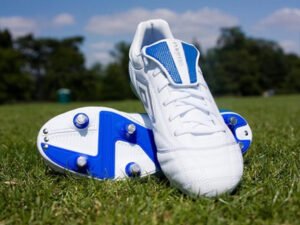
Core Features: SG boots are equipped with 6 to 8 removable metal studs, with a stud length of 1.5–2 cm. The metal material provides extreme traction for soft surfaces.
Best Pitch: Wet, muddy, and soft natural grass pitches, ideal for rainy match days.
Pros & Cons: Unmatched grip on muddy ground; however, metal studs are forbidden on hard ground and artificial grass, as they easily cause ankle sprains and stud breakage.
2. FG (Firm Ground) Football Boots
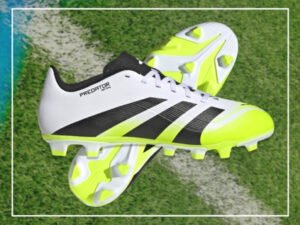
Core Features: The most popular professional boot type, featuring 10–14 TPU plastic studs with a length of 1–1.2 cm and a balanced sole layout.
Best Pitch: Dry or slightly wet high-quality natural grass pitches.
Pros & Cons: Fast acceleration and stable grip for competitive matches; not suitable for artificial grass, as the long studs wear down quickly and cause sole discomfort.
3. HG (Hard Ground) Football Boots
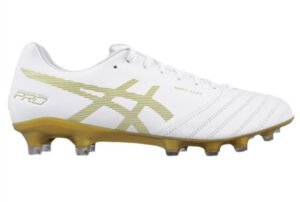
Core Features: Optimized for hard pitches, HG boots have shorter and denser studs (about 0.8 cm) compared to FG boots, with enhanced sole durability.
Best Pitch: Thick artificial grass and ordinary hard natural grass pitches.
Pros & Cons: Ultra-durable and cost-effective for daily training; slightly heavier than FG and AG boots.
4. AG (Artificial Ground) Football Boots
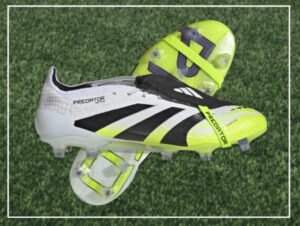
Core Features: Specially designed for artificial turf, AG boots have 20+ short round studs (0.5–0.6 cm), effectively preventing stud breakage and reducing knee pressure.
Best Pitch: Standard modern artificial grass pitches (the most common choice for amateur players).
Pros & Cons: Knee-friendly, wear-resistant and stable; the grip is slightly weaker than professional FG boots.
5. TF (Turf) Football Boots
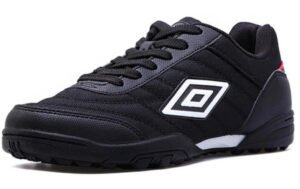
Core Features: Also known as “crushed stud” boots, with dense tiny rubber studs covering the entire soleplate.
Best Pitch: Short artificial grass, low-quality turf, plastic and cement sports courts.
Pros & Cons: Excellent shock absorption, anti-slip and injury-proof, perfect for beginners; slightly slow on acceleration due to flat and dense sole design.
6. IC (Indoor Court) Football Boots
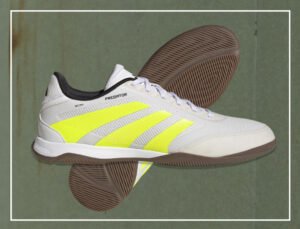
Core Features: Flat rubber sole with anti-slip texture, no studs at all.
Best Pitch: Indoor wooden courts, futsal venues and flat cement floors.
Pros & Cons: Superb ball control for indoor games; completely unsuitable for grass pitches due to poor grip.
Football Boot Classification by Ankle Cut
Low-Top Boots
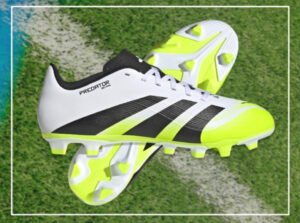
Lightweight and flexible with free ankle movement. Perfect for wingers and forwards who need frequent acceleration and sharp direction changes.
High-Top Boots
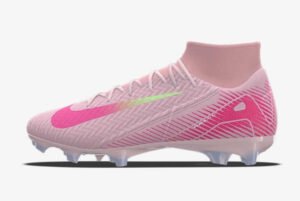
Provides tight ankle wrapping and effective ankle protection. Ideal for defensive players, midfielders, and players with old ankle injuries.
Football Boot Classification by Upper Material
- Kangaroo Leather: Premium soft touch, excellent ball control, top choice for professional players, high price.
- Cow Leather: Balanced softness and durability, cost-effective for daily training.
- Synthetic PU/Fabric: Ultra-light, waterproof and easy to clean, the mainstream material for modern speed boots.
Quick Selection Guide for Beginners
- Dry high-quality natural grass → FG Boots
- Wet/muddy natural grass → SG Boots
- Standard artificial grass → AG Boots
- Short turf / cement court → TF Boots
- Indoor futsal court → IC Boots
- Speed players (Forward/Winger) → Low-top synthetic boots
- Defensive/Control players → High-top leather boots
For more tips, check our football gear buying guide and best FG football boots review. You can also learn more from the Nike official football boot guide and find the right pair for your position in our football boots by player position article.
football gear buying guide
best FG football boots
football boots by player position
Nike official football boot guide
Final Thoughts
Matching your football boots to your playing surface and position is the key to better performance and long-term joint protection. Avoid using one pair of boots for all pitches, and choose professional cleats based on your actual training and match scenarios.