Bladed vs Conical Football Boot Studs: Which Is Better for Performance?
When choosing football boots, one of the most important yet overlooked decisions is the stud pattern. Many players focus on brand, upper material, or colorway, but the shape of the studs can significantly affect traction, agility, comfort, and even injury risk. The debate between bladed vs conical football boot studs has been ongoing for years, with professional players using both designs at the highest levels of the game.
In this guide, we’ll compare bladed and conical studs in detail, explain their advantages and disadvantages, and help you determine which stud configuration is best for your playing style and field conditions.
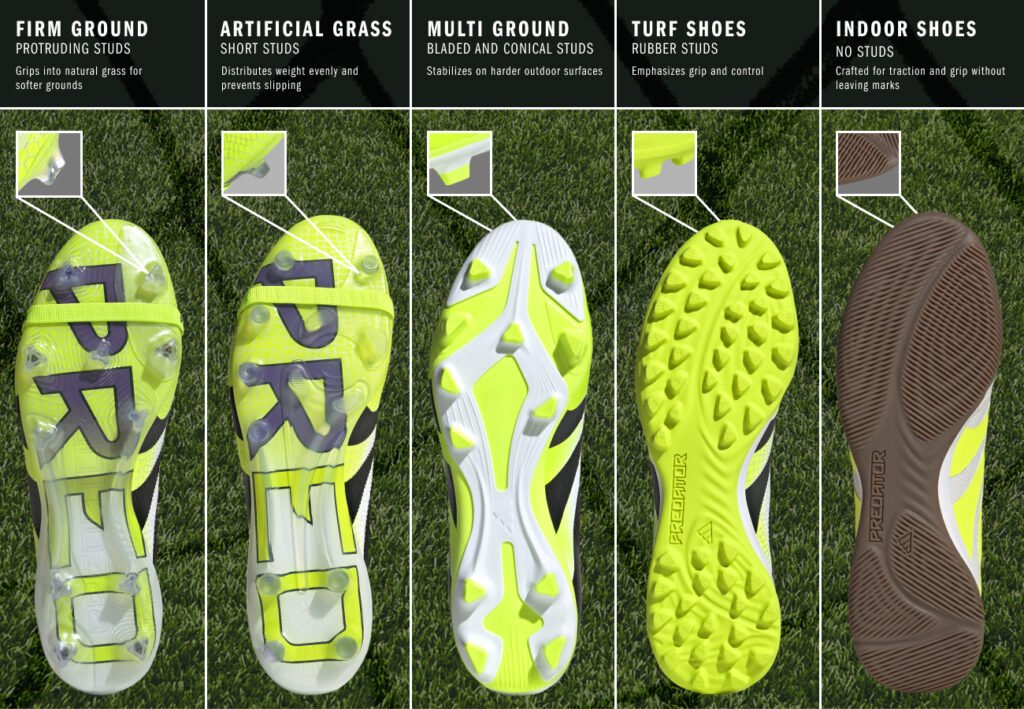
What Are Bladed Football Boot Studs?
Bladed studs are elongated studs designed to increase surface contact with the ground. Rather than the traditional round shape, they feature a wider profile that provides aggressive traction during acceleration, sprinting, and sudden directional changes.
Many modern speed boots use bladed or semi-bladed stud configurations because they can generate powerful forward propulsion and explosive movement on firm natural grass surfaces.
- Enhanced forward traction
- Excellent acceleration performance
- Strong grip during quick cuts
- Popular among wingers and attacking players
- Widely used in modern speed-focused football boots
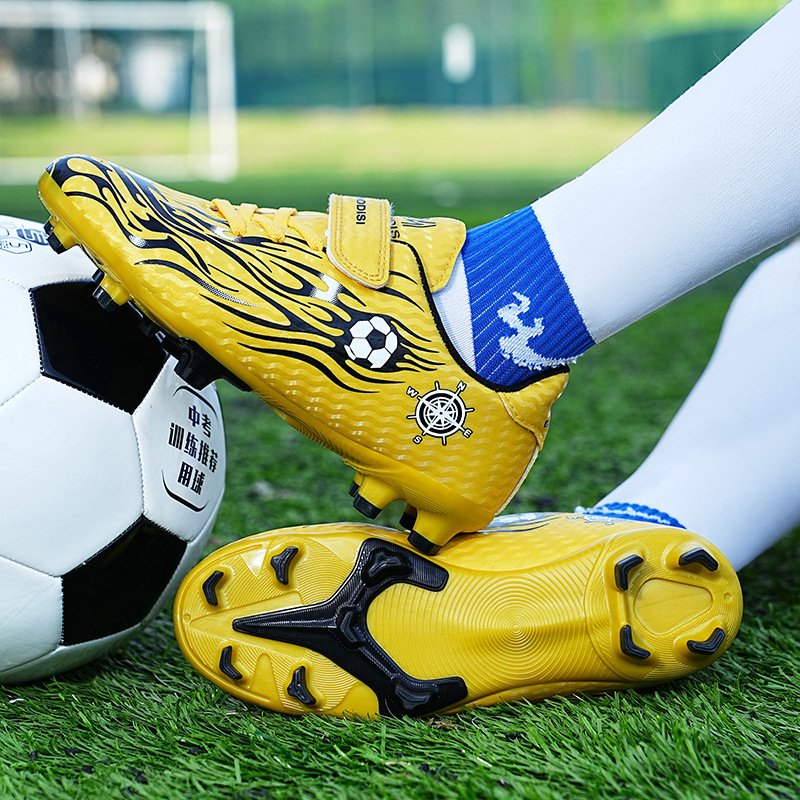
Advantages of Bladed Studs
- Superior straight-line speed: The larger contact area helps transfer force efficiently during acceleration.
- Strong grip: Players often feel more secure when sprinting or changing direction aggressively.
- Modern performance design: Many elite football boots use bladed configurations to support high-speed play.
Potential Drawbacks of Bladed Studs
- Can create higher pressure points underfoot.
- May feel less forgiving on hard surfaces.
- Reduced rotational freedom during turns.
- Some players find them less comfortable for extended wear.
What Are Conical Football Boot Studs?
Conical studs feature a traditional round shape that allows the foot to rotate more naturally during movement. This design has been used for decades and remains popular among professional players who prioritize agility, comfort, and smooth directional changes.
Unlike bladed studs, conical studs release from the ground more easily, which can improve maneuverability during quick turns and technical play.
- Excellent rotational freedom
- Balanced traction in all directions
- Comfortable pressure distribution
- Popular among midfielders and technical players
- Suitable for various field conditions
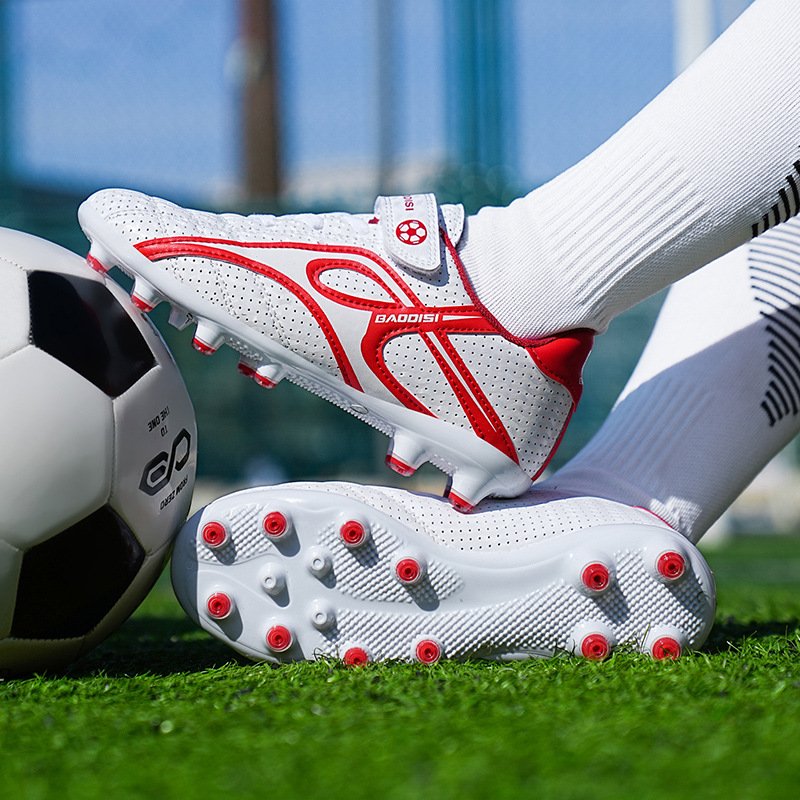
Advantages of Conical Studs
- Improved agility: Easier pivoting and turning during tight movements.
- Enhanced comfort: Pressure is distributed more evenly across the sole.
- Versatility: Performs well across different positions and playing styles.
- Natural movement: Supports fluid footwork and technical play.
Potential Drawbacks of Conical Studs
- May provide slightly less aggressive traction during sprinting.
- Less bite into the ground during powerful acceleration.
- Speed-focused players may prefer a more aggressive stud shape.
Traction Comparison: Bladed vs Conical Studs
| Performance Factor | Bladed Studs | Conical Studs |
|---|---|---|
| Acceleration | Excellent | Very Good |
| Straight-Line Speed | Excellent | Good |
| Turning Ability | Good | Excellent |
| Comfort | Good | Excellent |
| Rotational Freedom | Moderate | Excellent |
| Pressure Distribution | Moderate | Excellent |
Which Stud Pattern Is Best for Your Position?
Your playing position can influence which stud pattern works best.
- Wingers: Often benefit from bladed studs due to repeated sprinting and acceleration.
- Strikers: May prefer bladed studs for explosive movement in attacking situations.
- Midfielders: Frequently choose conical studs for comfort and agility.
- Defenders: Can benefit from either option depending on playing style.
- Technical players: Usually appreciate the natural movement of conical studs.
Field Conditions Matter
Stud selection should also consider the playing surface. On firm natural grass, both stud types perform effectively. However, players should always choose boots specifically designed for their field conditions.
For more information about selecting football boots for different foot shapes, see our Wide Toe Box Football Boots Guide.
Bladed vs Conical Football Boot Studs: Final Verdict
There is no universal winner in the bladed versus conical debate. Bladed studs excel in acceleration and aggressive traction, making them ideal for speed-focused players. Conical studs offer superior agility, comfort, and rotational freedom, making them a favorite among technical players and midfielders.
The best choice ultimately depends on your position, movement patterns, comfort preferences, and playing surface.
If you’re developing your own football boot collection, our guide on How to Develop a Custom Football Boot From Concept to Production explains the complete manufacturing process.
Why Work with EAXIN Football Boot Manufacturing?
EAXIN specializes in custom football boot development for global brands. From stud configuration engineering to outsole development and private label production, we help brands create football boots tailored to their target players.
- Custom football boot manufacturing
- OEM and ODM services
- Private label football boots
- Custom outsole development
- Flexible MOQs
- Professional quality control
Ready to develop your next football boot project?
External Resource: Learn more about international football regulations at FIFA.