Private Label Shoe Brand Guide: How to Communicate with an OEM Factory
By EAXIN Shoes Team | Updated: August 9, 2026
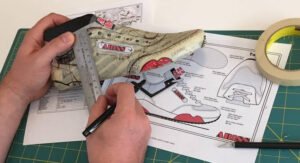
Starting a private label shoe brand is an exciting journey. You have the vision, the brand name, and the market in mind. However, the bridge between your dream and a physical product is a reliable shoe manufacturer. For many new brand owners, the biggest hurdle isn’t funding or marketing; it’s the initial communication with an OEM or ODM factory in China.
A vague inquiry often leads to slow, generic responses, or worse, a factory that doesn’t fully understand your needs. To turn your concept into a high-quality, market-ready product, you need to know exactly what information to share and how to ask the right questions. This guide is your step-by-step manual for a successful partnership with a custom shoe manufacturer.
1. Know Your Model: OEM, ODM, or Private Label?
Before you type a single word in an email, you must understand the type of service you’re seeking. This sets the foundation for the entire production process. Many factories specialize in one area, and using the correct terminology immediately clarifies your role.
- OEM (Original Equipment Manufacturer): You come to the factory with a complete design. You have the tech packs, specific materials, and exact measurements. The factory’s job is to execute your design precisely. For a detailed explanation, you can refer to this external resource on OEM definition.
- ODM (Original Design Manufacturer): You select from the factory’s existing designs and modify them. You might change the material, colorway, or add your logo. This is faster and often has a lower minimum order quantity (MOQ).
- Private Label: This is a branding layer applied to either OEM or ODM products. The core focus is on your brand identity: logo placement, custom packaging, and labels.
Pro Tip: If you’re a first-time brand, starting with an ODM + Private Label model is often the safest and most cost-effective path. It allows you to test the market with a proven base silhouette while building your brand.
For a deeper dive into these models, please refer to our comprehensive guide on OEM vs ODM vs Private Label Manufacturing.
2. Building the Perfect Product Brief
Think of your inquiry email as a mini-tech pack. The more specific you are, the more accurate the quote and the faster the sampling process. A simple “I want custom sneakers, send me a price” will only lead to more questions.
Here are the eight critical details you need to include for a quote-ready inquiry:
- Product Type & Reference: “Private label men’s leather sneaker” is good. “A low-top sneaker similar to the attached image of the [Brand X] model” is better. Include photos from the front, side, back, and sole.
- Target Market & Price Point: Tell them where you’re selling (e.g., US, Europe) and your target retail price. This helps the factory recommend appropriate materials for your budget.
- Materials: Be clear about the upper (leather, mesh, suede?), lining, insole, and outsole. If you’re unsure, state your preference (e.g., “durable, breathable knit upper”) and ask for suggestions.
- Outsole Choice: Do you want to use an existing outsole mold to save money, or is a custom mold essential for your design? This is a major cost driver.
- Size Range & Fit: Specify the size standard (US, EU, UK) and the target fit (narrow, standard, wide). Different markets have different fit expectations.
- Logo & Branding: Send your logo file (preferably vector format) and specify placement: tongue label, side print, insole embossing, or heel tab. Also, mention packaging requirements (box, dust bag, hang tags).
- Quantity (MOQ): Be honest about your first order estimate. A 200-pair launch has a very different production path than a 2,000-pair order. Giving a range (e.g., “300-500 pairs”) is helpful.
- Timeline: When do you need the sample? When do you hope to ship bulk goods? This helps the factory manage their production schedule.
Sample Inquiry Email Template
Subject: Inquiry: Private Label Men’s Leather Sneaker – [Your Brand Name]
Hi [Factory Name] Team,
I am launching a new private label brand for the US market and am interested in developing a low-top leather sneaker.
Project Details:
- Model: ODM base model similar to your Style #123, but with our logo and specific color changes.
- Target Price: Retail at $80-$100. We need a balance of quality and cost.
- Materials: White full-grain leather upper, soft textile lining, and a lightweight rubber outsole (flexible, could use an existing sole).
- Logo: Embossed on the heel and printed on a woven label for the tongue. See attached logo file.
- Packaging: Custom printed shoe box and a dust bag with our logo.
- Quantity: First order of 300 pairs (one color, US sizes 7-12).
- Timeline: Sample needed in 4 weeks, bulk delivery in 12 weeks.
Please let me know if you need more details. Could you provide an estimated quote and sample cost?
Best regards,
[Your Name]
3. Demystifying MOQ (Minimum Order Quantity)
MOQ is often the biggest concern for new brands. Many assume they need thousands of pairs, but this isn’t always the case. For private label projects, MOQ is not a single number; it’s a calculation based on your specific product requirements.
Several factors influence the MOQ:
- Material Sourcing: Using stock materials that the factory already has in bulk usually allows for a lower MOQ. Custom colors or materials often require a higher minimum purchase.
- Outsole Tooling: Using an existing mold from the factory has a lower MOQ. Creating a new custom mold adds a setup cost but doesn’t necessarily change the MOQ in the long run.
- Branding: Simple logo methods like printing have lower minimums than custom embossing plates or metal logos.
A good manufacturer will be transparent and explain why the MOQ is what it is. As a general rule, starting with a stock ODM style and adding your private label branding is the most effective way to access a lower MOQ for your first order. For more on this, see this external guide on MOQ for retail.
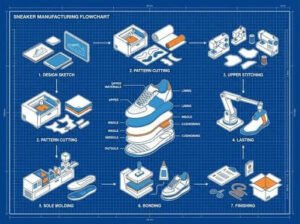
4. The Sampling Process: Your Quality Gate
The sample is the most critical step. It is not just a prototype; it is the “quality standard” against which your bulk order will be measured. Treat it as a formal approval process, not a formality.
A standard sampling process involves these stages:
- Concept Confirmation: You and the factory agree on the style, last shape, and materials.
- First Sample: You receive the physical sample. Check the overall look, comfort, and whether it matches your brief.
- Revision Sample: You request changes. The factory corrects the color, logo placement, stitching, or materials.
- Pre-Production Sample (PP Sample): This sample is made with the exact materials and production methods that will be used for bulk. This is the final “sign-off” sample.
Always check the following when you receive a sample:
- Fit: Does it feel right? Does it correspond to the size standard you requested?
- Materials: Is it the leather, mesh, or suede you agreed upon?
- Logo: Is the size, position, and quality of the logo perfect?
- Workmanship: Is the stitching straight, and is the sole glued properly?
Fixing problems at the sample stage is cheap; fixing them in production is extremely expensive and can ruin your brand’s reputation.
5. Understanding Your Production Timeline
First-time importers often underestimate the time required from initial contact to delivery. A realistic timeline from sample approval to your warehouse is typically 3 to 5 months.
- Sampling Phase: 2-4 weeks (plus 1-2 weeks for revisions).
- Production Phase: 4-8 weeks (depending on shoe complexity and order size).
- Shipping Phase (Sea Freight): 3-6 weeks to major ports in the US or Europe.
Plan your launch date accordingly and always build in a buffer for unexpected delays, such as a missed sample revision or a shipping hold.
6. Quality Control and Inspection
One of the biggest mistakes a new brand can make is skipping a pre-shipment inspection. For a small investment (often less than 2% of the order value), you can prevent a catastrophic shipment of defective goods.
Never authorize bulk production without a clear quality standard approved and documented on your final sample. During production, you can request mid-production photos from the factory. Before shipment, use a third-party inspection service or a detailed photographic report from the factory to check for common defects like loose soles, uneven stitching, and color mismatches. You can learn more about this from external resources on footwear inspection.
This step is non-negotiable for protecting your brand’s reputation from day one.
Conclusion: Building a Successful Partnership
Successfully launching a private label shoe brand is about more than just finding a low price. It’s about building a relationship with a manufacturer who understands your vision and can guide you through the complexities of production.
By preparing a detailed brief, asking the right questions, and respecting the timeline and quality control steps, you set the stage for a smooth collaboration. Your manufacturer is your partner in bringing your brand to life. Clear, professional communication is the most effective tool you have to turn your zero into a hero in the footwear industry.
Ready to start your private label project?
Contact EAXIN Shoes today to discuss your custom sneaker, sports shoe, or casual footwear needs. Our team is ready to bring your brand to life.